
As the conversation around brain health continues to evolve, a growing body of research is pointing to the arts being a historically overlooked yet powerful tool used to transform cognitive health. From music to movement, studies are showing artistic expression to be a meaningful way to support cognitive function, emotional well-being, and enhanced quality of life for older adults.
At Ingleside at Rock Creek, research-based music and movement programs are already making a difference. Through a pilot partnership with Washington Performing Arts and the Milken Institute School of Public Health at George Washington University, intentional performing arts programs provide an opportunity to enhance the neurological and cognitive health of Ingleside residents, bridging the worlds of science, dance, music, and compassionate care.
Three Benefits of the Arts for Cognitive Decline in Seniors
As the flagship community for this initiative, Ingleside at Rock Creek serves as a real-world environment where arts-based interventions are not only studied but experienced daily by residents. This hands-on approach demonstrates how creative programming can be effectively integrated into senior living communities to support brain health in practical ways.
1. Engaging Parts of the Brain That Remain Active
For residents living with Parkinson’s disease, Alzheimer’s, or other forms of cognitive impairment, arts-based interventions can activate areas of the brain that remain responsive even as memory declines. Music and movement tap into rhythm, emotion, and muscle memory, helping residents engage with one another in a way that they otherwise would not be able to in a traditional care setting.
2. Supporting Physical and Cognitive Function Through Movement
For example, programs like Dance for Parkinson’s are designed to improve balance, coordination, and flexibility while also stimulating cognitive function. Movement-based activities often require seniors to focus on balance, sequencing, and spatial awareness, all of which aid in keeping the brain active.
3. Reducing Isolation and Fostering Connection
Arts programming in senior living communities like Ingleside helps to foster social interaction, and emotional connection, which are both key components of overall brain health. When residents can partake in shared experiences, it can help reduce isolation and create moments of meaning for individuals.
Dance for Parkinson’s: A Real-World Example
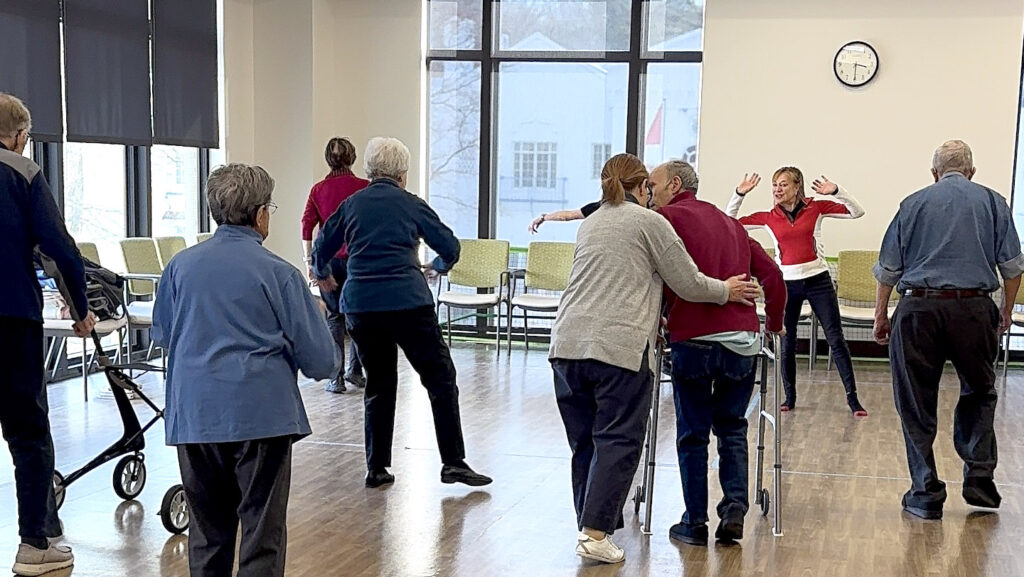
One specific NeuroArts Collective program at Ingleside at Rock Creek already making a difference is Dance for Parkinson’s, which brings structured, artist-led movement classes to residents living with Parkinson’s disease.
According to Brandi Rose, Cultural Arts Manager at Ingleside, the impact has been immediate and deeply meaningful:
“The Dance with Parkinson’s program gives our residents the opportunity to experience joy through movement at a time when mobility may require more intention and care,” she shared.
During the dance session, residents learn choreographed routines designed to counteract the physical symptoms of Parkinson’s, such as stiffness and difficulties with balance, along with the emotional challenges that can come with the condition.
“The room is filled with energy and connection. Participants smile and laugh their way through the routines. The program is valuable to our residents, and we’re grateful to Washington Performing Arts and George Washington University for bringing us this opportunity,” Brandi added.
The Future of Senior Living: Integrating Arts into Memory Care
As arts programming becomes a more essential component of senior care, research-backed initiatives like NeuroArts Collective are helping redefine how senior living organizations can approach cognitive decline. By integrating music, dance, and creative expression into residents’ everyday life, communities like Ingleside at Rock Creek are shifting the narrative from limitation to possibility.
The takeaway is clear: even as the brain changes, the capacity for joy, connection, and creativity remains, and the arts can help unlock it.
For more information on Ingleside’s NeuroArts Collective programming, read this recent writeup in McKnight’s Senior Living, or schedule a visit today!